ACL Rehabilitation in Noida – Get Your Knee Strong, Stable & Sport-Ready Again

ACL Rehabilitation Programme in Noida – Built Around Your Knee, Your Goals and Your Timeline

An ACL (Anterior Cruciate Ligament) injury rarely feels like “just a knee problem.” It affects how you walk, how you climb stairs, whether you can play your sport again, and honestly, how confident you feel in your own body. At The Physios, we have guided hundreds of patients through ACL rehabilitation in Noida – from school-level footballers and weekend cricketers to working professionals who twisted a knee on a slippery floor.Our ACL Rehabilitation Programme in Noida is not a fixed set of exercises printed on a sheet. It is a phase-wise, criteria-based plan that moves forward only when your knee is ready – not just because a certain number of weeks have passed. That single difference is what separates a knee that “feels okay” from a knee that is actually strong enough to run, jump, pivot and land safely.The ACL is one of the two cruciate ligaments inside your knee. Its job is to stop the shin bone from sliding forward and to keep the knee stable when you change direction. It usually gets injured during a sudden twist, an awkward landing, a quick stop, or direct contact – which is why it is so common in football, kabaddi, badminton, basketball and even in gym training. Injuries range from mild sprains to complete tears. Some need surgery (ACL reconstruction), many partial tears can be managed without it – but in both cases, structured ACL physiotherapy in Noida is what decides the final outcome.
If you are searching for reliable ACL injury treatment in Noida, whether you have just been diagnosed, are waiting for surgery, or are already weeks into recovery, this page explains exactly how we work, what each phase involves, and what you can realistically expect.
ACL Conditions We Treat at Our Noida Clinics

Acute ACL Tears & Sprains

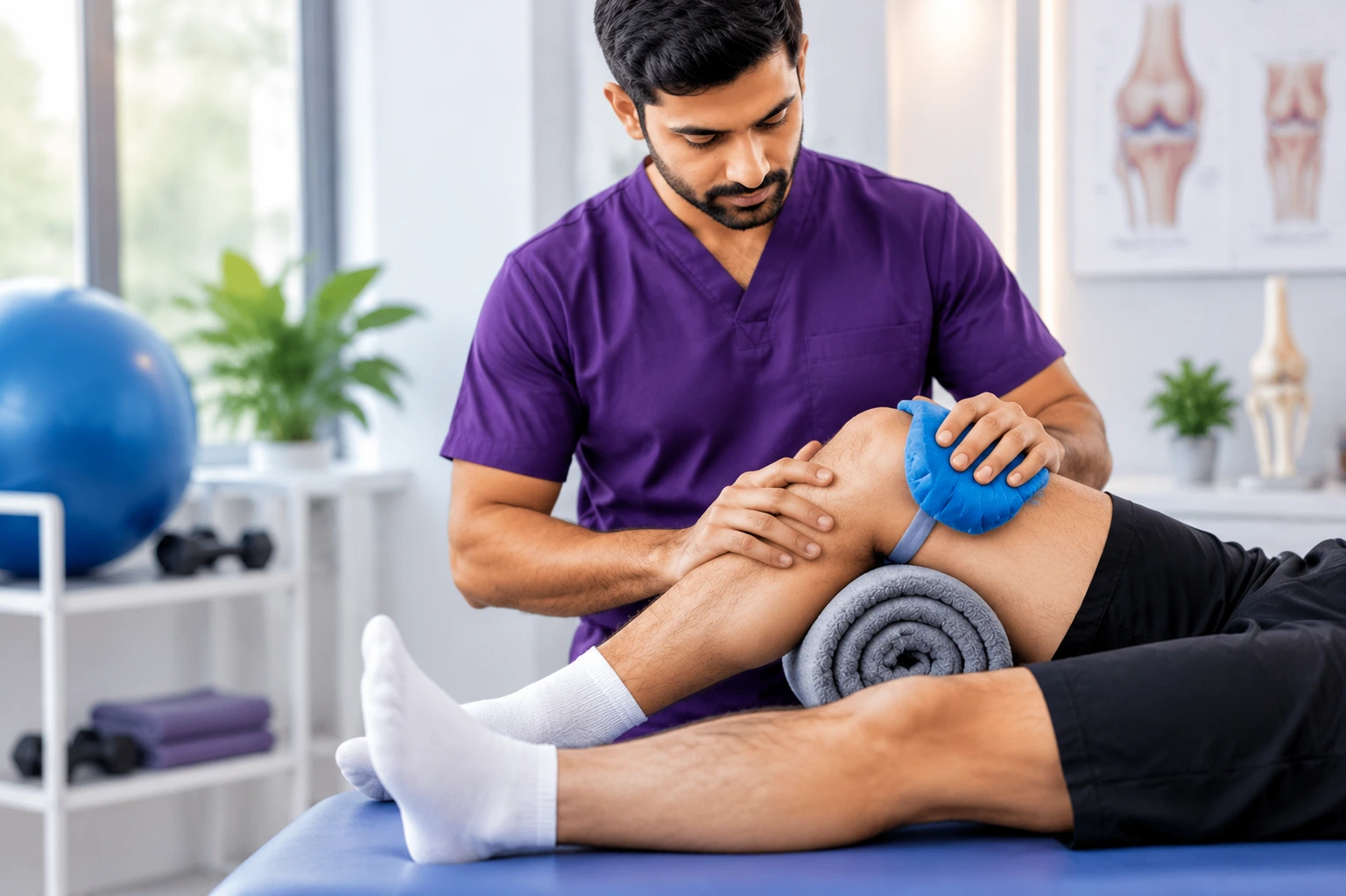
Conservative ACL injury treatment in Noida for partial tears, Grade 1–2 sprains, or patients who are not surgical candidates. We focus on swelling control, quadriceps and hamstring activation, core control and joint stability so the knee learns to protect itself.

Post-Op ACL Reconstruction (ACLR)

Phased, graft-protective recovery after bone-patellar-tendon, hamstring or quadriceps graft surgery. Our protocol is aligned with your surgeon’s instructions and adjusted to the graft type, because a hamstring graft and a patellar tendon graft do not heal at the same pace.

Chronic Instability & Combined Tears

Targeted management for knees that keep “giving way,” old untreated ACL tears, and combined injuries such as ACL + MCL, ACL + meniscus repair, or multi-ligament reconstruction. These need a slower, more carefully sequenced plan.

Your Step-by-Step ACL Rehabilitation Journey in Noida

From day-one pain relief to full return-to-sport clearance – every phase of our ACL recovery physiotherapy in Noida has clear entry and exit criteria, so you always know where you stand.

Phase 01

What Happens at Your First ACL Consultation

Your first session for ACL injury treatment in Noida at The Physios usually lasts 45–60 minutes and covers:

Your story first

How the injury happened, what you felt and heard (many patients report a “pop”), what you have done since, and what you want to get back to.

Reports review

Bring your MRI, X-ray and surgical discharge summary if you have had surgery. Graft type and surgical notes directly shape your plan.

Physical assessment

Return to walking pain-free? Climbing stairs? Running? Playing competitive football? Your goals set the end-point of the programme.

Goal setting

Return to walking pain-free? Climbing stairs? Running? Playing competitive football? Your goals set the end-point of the programme.

Your plan, explained

You leave with a clear understanding of your current phase, what the next milestone is, how often you need to come, and a home exercise routine with written or video instructions.

Our Approach to ACL Physiotherapy in Noida

Every patient who walks into The Physios for ACL physiotherapy in Noida gets a plan that is written for them – not copied from a textbook. A 19-year-old football player and a 45-year-old office executive may have the exact same tear on MRI, but their goals, their muscle condition, their daily routine and their timelines are completely different.
Here is what guides our approach:

Stages of ACL Rehabilitation

  • You move to the next phase when you meet strength, swelling, range and control benchmarks – not simply because “it has been 6 weeks.
  • Manual therapy, soft tissue release and joint mobilisation to reduce pain and stiffness, combined with a strong, progressive exercise programme that you own.
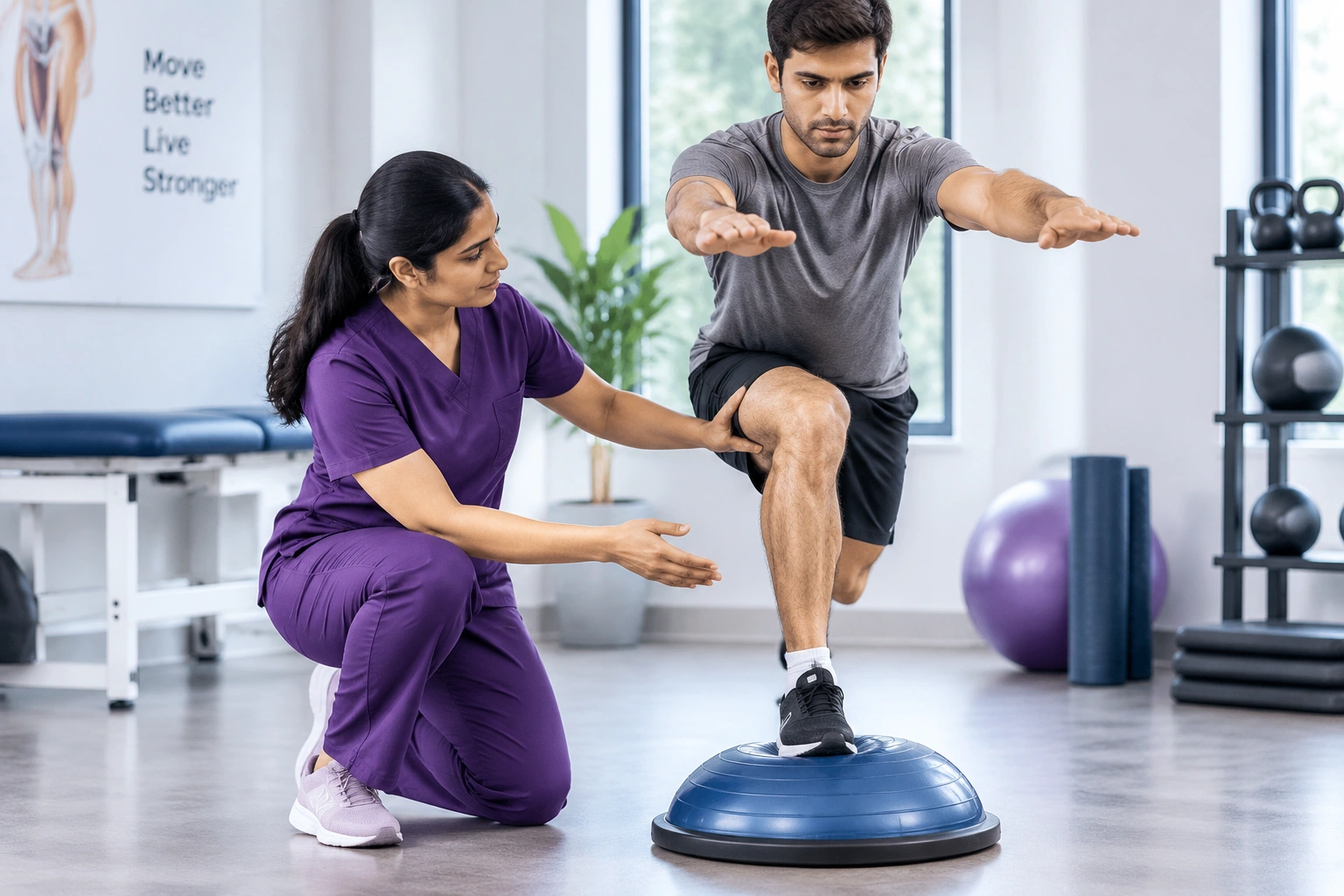
  • Functional Training and Neuromuscular Re-education As you progress in your recovery, we will introduce more challenging exercises to improve functional movement. This includes training to enhance balance, proprioception, and coordination, which are vital for regaining full control over your knee. The programme incorporates neuromuscular re-education techniques to improve muscle recruitment patterns, ensuring that your body moves properly during activities like walking, running, and jumping.
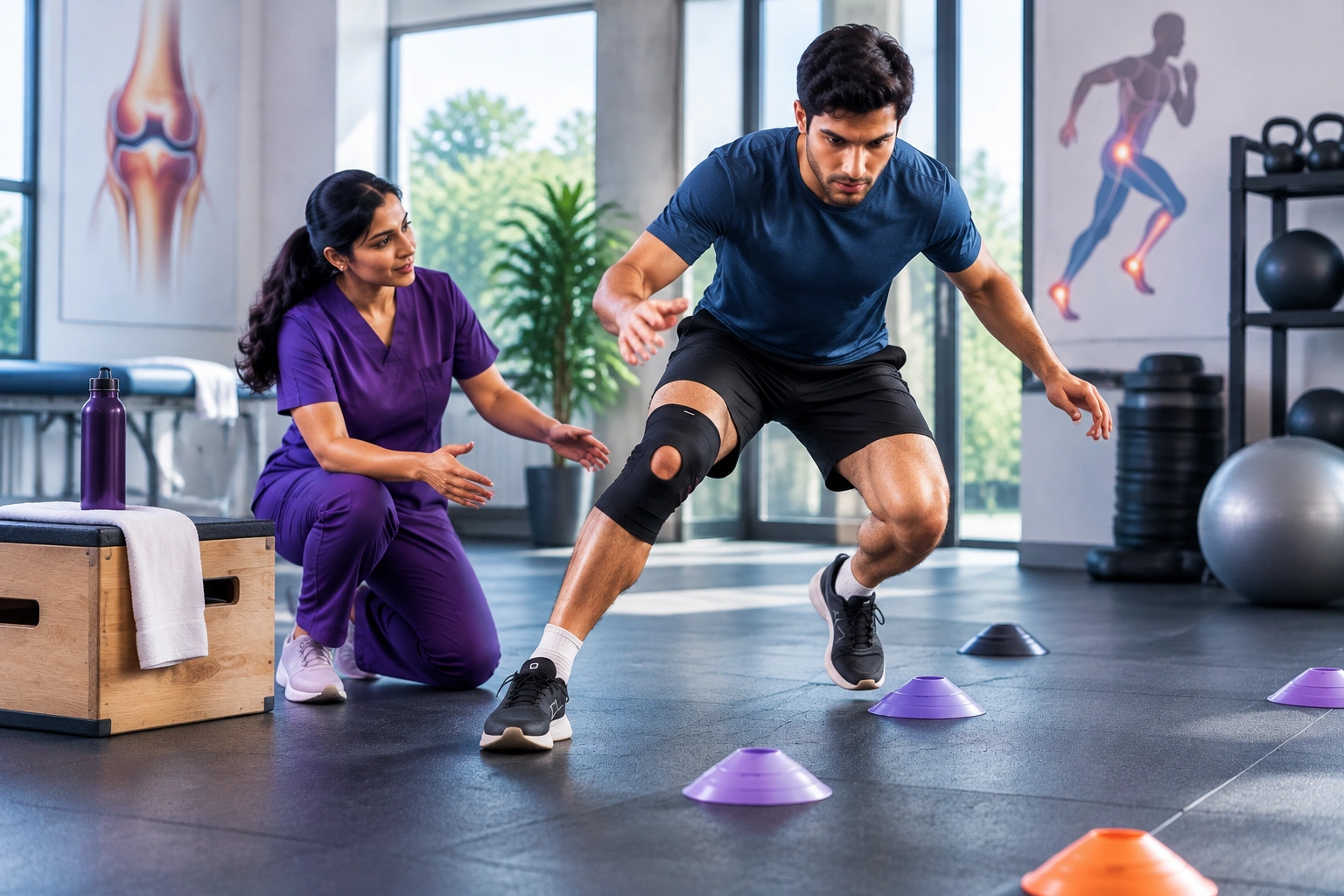
  • Sports-Specific Rehabilitation If you are an athlete or enjoy sports, our ACL Rehabilitation Programme includes sports-specific drills to help you safely return to your activity. These exercises are designed to mimic the movements and demands of your chosen sport, such as cutting, pivoting, and sprinting. This stage of rehabilitation ensures that you are fully prepared for a return to your sport and helps reduce the risk of reinjury.
  • Return-to-Sport Assessment Before you return to your normal sporting activities, we perform a detailed return-to-sport assessment to evaluate whether your knee is ready to withstand the high demands of competitive play. This assessment includes strength testing, functional movement evaluations, and a review of your progress throughout rehabilitation.

Why Choose The Physios for ACL Rehabilitation?

At The Physios, we are committed to delivering top-notch rehabilitation services to all of our patients. Our physiotherapists are highly trained in ACL injuries and rehabilitation techniques, offering personalized care at every stage of your recovery journey. We focus on a holistic approach that not only treats the injury but also strengthens your body, improves your movement patterns, and ensures long-term knee health. Our state-of-the-art clinic is equipped with the latest rehabilitation equipment, allowing us to offer advanced treatments such as cryotherapy, electrotherapy, and dry needling. We also work closely with orthopedic surgeons and other healthcare professionals to ensure that your rehabilitation is both comprehensive and effective.

ACL Rehabilitation Conditions We Treat

  • ACL Sprain or Tear: Whether it’s a partial or complete tear, we provide rehabilitation to restore knee function and prevent long-term instability.
  • Post-Surgical Rehabilitation: After ACL surgery, we guide you through a structured rehabilitation program to optimize recovery and improve outcomes.
  • Chronic ACL Issues: For those suffering from long-standing ACL issues, our tailored approach can help manage pain and improve function.

Frequently Asked Questions

Can an ACL tear heal without surgery?

A complete ACL tear does not heal back on its own because the ligament has a poor blood supply. However, many partial tears – and even some complete tears in people who do not play pivoting sports – can be managed very successfully with structured physiotherapy that builds the surrounding muscles to take over the stabilising role. At The Physios, we assess knee stability objectively before suggesting whether non-surgical ACL injury treatment in Noida is a realistic option for you.

Ideally within the first 2–5 days after surgery, as soon as your surgeon clears you. Early physiotherapy focuses on swelling control, getting full knee extension and activating the quadriceps. Delaying this first phase is one of the most common causes of long-term stiffness.

For post-surgical patients, a full programme typically runs 9–12 months until clearance for competitive sport. If your goal is only pain-free walking and daily activities, you may need 3–4 months. Non-surgical patients usually complete rehab in 3–6 months. The exact duration depends on your graft, your consistency with home exercises and your end goal.

In the first 2–3 weeks, 3–5 sessions per week is common. From week 3 onwards, 2–3 clinic sessions per week combined with a daily home programme works well for most patients. As you reach the strength and agility phases, sessions become longer and more intensive but may reduce in frequency.

Yes. For post-operative patients, we follow your surgeon’s protocol regarding weight-bearing, brace use and range-of-motion limits, and we share progress updates when needed. If we notice anything concerning – persistent swelling, loss of extension, or instability – we will advise you to consult your surgeon promptly.

Yes. For post-operative patients, we follow your surgeon’s protocol regarding weight-bearing, brace use and range-of-motion limits, and we share progress updates when needed. If we notice anything concerning – persistent swelling, loss of extension, or instability – we will advise you to consult your surgeon promptly.

Can I do ACL rehab at home instead of visiting the clinic?

Partly, yes. We offer home-visit ACL physiotherapy in Noida for the first few weeks after surgery when travelling is difficult. However, the strength, balance and agility phases need equipment and close supervision, so we recommend transitioning to the clinic once you are mobile.

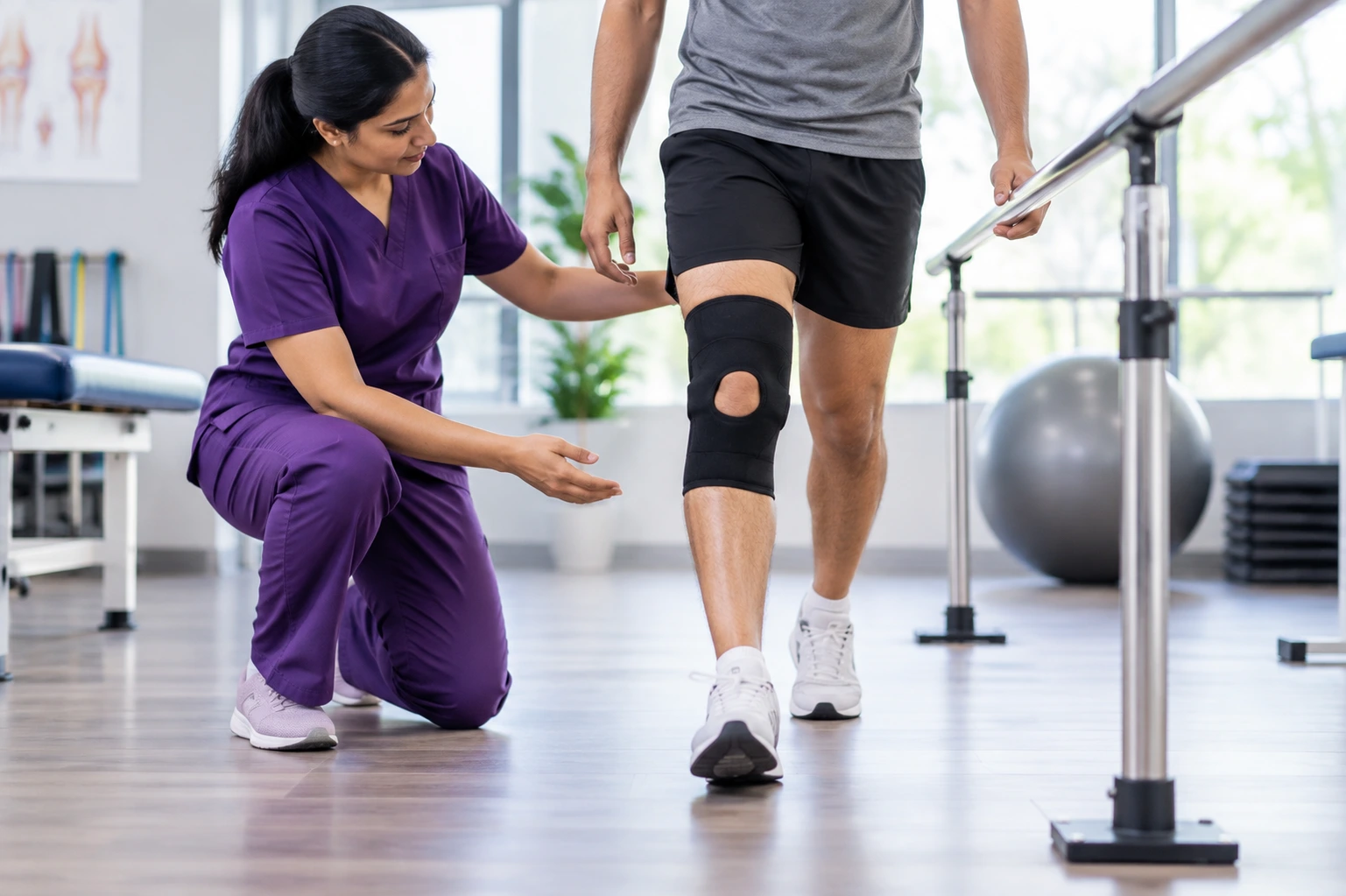
Most patients walk without crutches by 2–3 weeks, once they have full extension, good quadriceps control and no limp. Brace use depends on your surgeon’s protocol and whether other structures (like the MCL or meniscus) were repaired. We never remove support based on a date alone – we check that your knee can actually control itself first.

Straight-line jogging usually starts around 3–4 months, only after you meet strength and swelling criteria. Agility and cutting drills begin around month 4–6. Return to competitive pivoting sports is generally not before 9 months and only after passing objective return-to-sport tests. Returning earlier is the single biggest risk factor for re-tearing the ACL.

Session fees depend on whether you choose clinic-based or home-visit sessions, and on the phase of rehab. We offer package options for the full ACL Rehabilitation Programme in Noida to make long-term recovery more affordable. Please call or WhatsApp +91-8826961161 for current pricing and package details.

Not by how it feels – by what the tests show. Before clearance, we check limb symmetry index (strength of the injured leg compared to the healthy leg, aiming for 90% or above), single-leg hop tests, Y-balance scores, landing mechanics and sport-specific movement quality. Patients who pass these tests have a significantly lower re-injury rate than those cleared on time alone.

Contact Us

For enquiry

    Scroll to Top